


If a dentist has recommended a root canal, there’s no reason to panic. Modern root canal treatment is a routinely performed, highly effective way to relieve severe tooth pain and preserve a natural tooth that would otherwise be lost. With advances in technique and anesthesia, many patients report a comfortable experience that restores function and stops the spread of infection.
At Crowns Now Family Dentistry, we combine up-to-date technology with a patient-centered approach to help you keep a healthy, functional smile. Our team focuses on gentle care, clear communication, and predictable outcomes so you can make informed choices about preserving your teeth.
Keeping a natural tooth whenever feasible is usually the best option for long-term oral health. Natural teeth maintain the alignment of the bite, support surrounding bone, and provide chewing efficiency that does not always come from prosthetic replacements. Root canal therapy is designed to remove disease from inside the tooth while leaving the outer structure in place, protecting these important benefits.
Contemporary endodontic techniques and sterilization standards give root canal treatment very high success rates when diagnosed and performed appropriately. Because the procedure removes infected or inflamed pulp tissue and seals the internal spaces, it eliminates the source of pain and greatly reduces the chance of recurrent infection when followed by proper restoration.
Choosing preservation over extraction often means fewer long-term procedures and more predictable oral function. For many patients, a root canal followed by a well-fitted crown or restoration returns the tooth to full use for many years — often for life — when combined with routine dental care.

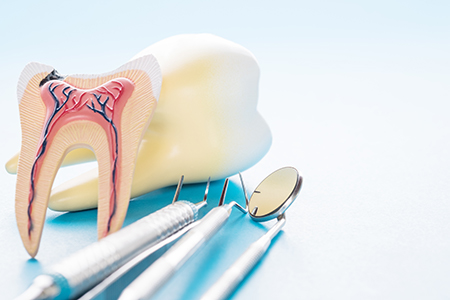
Under the hard enamel and dentin of every tooth lies the dental pulp: a small chamber containing nerves, connective tissue, and blood vessels. While the pulp helps a tooth develop and sense stimuli, it is entirely possible for a fully formed tooth to remain healthy after the pulp has been removed. When that inner tissue becomes infected or irreversibly damaged, treatment is required to stop the problem from spreading.
Pulp damage can begin in several ways — deep decay that reaches the center of the tooth, cracks or fractures that expose internal tissues, traumatic injuries, or repeated dental work that compromises the inner structures. Once bacteria penetrate the pulp, an infection can develop, causing inflammation, pressure, and the characteristic pain associated with needing a root canal.
Not every case of sensitivity or discomfort means the pulp is irreversibly harmed, which is why careful diagnosis matters. Dental professionals use clinical exams and radiographs to assess the extent of tissue damage and to determine whether root canal therapy is the most appropriate option to protect the tooth and surrounding structures.
Persistent or severe tooth pain is often the clearest sign that something has affected the inner tissues of a tooth. Pain that wakes you at night, intensifies when you bite, or lingers after exposure to hot or cold can indicate inflammation or infection within the pulp. While pain can have other causes, this pattern of symptoms warrants prompt evaluation.
Changes in a tooth’s appearance and surrounding tissues are also telling. A tooth that darkens or loses its natural color may have compromised internal tissue. Swelling around the gumline, visible pus, or a small bump on the gum near a tooth can indicate an abscess and an active infection that requires immediate attention.
In many cases, even when symptoms are mild or intermittent, radiographic signs such as changes around the root tip reveal developing pathology. Cracks, chips, or deep decay increase the likelihood that a tooth will need root canal treatment to remove damaged tissue and prevent further breakdown of the tooth and supporting bone.

Root canal therapy today follows a logical sequence that prioritizes comfort and infection control. After a thorough exam and imaging, the tooth is numbed with local anesthesia so the procedure is comfortable. If needed, sedation options are available to help patients who experience anxiety about dental treatment.
The dentist or endodontist creates a small access opening in the tooth to reach the pulp chamber and root canals. Using specialized instruments and irrigation solutions, the practitioner removes infected tissue, shapes and cleans the canals, and disinfects the internal spaces. Once cleansed and dried, the canals are filled with a biocompatible material that seals them against bacterial re-entry.
Some teeth require a single visit; others need two or more appointments depending on anatomy and the presence of active infection. After root canal therapy, the tooth typically receives a temporary filling and will need a definitive restoration — often a crown — to restore strength and long-term function. Your clinician will explain the recommended timeline and next steps based on your individual case.
After the procedure, it’s normal to experience some numbness until the anesthetic wears off and mild tenderness for a few days as surrounding tissues settle. Over-the-counter pain relievers are often sufficient for managing discomfort, and your dentist will advise specific recommendations. If antibiotics are prescribed to address an active infection, it’s important to complete the full course as directed.
While a treated tooth may feel normal quickly, it remains structurally vulnerable until a permanent restoration is placed. Avoid chewing hard or sticky foods on the treated side and follow your clinician’s timeline for scheduling the final crown or restoration. Proper protection prevents fractures and helps the tooth function reliably for years.
At Crowns Now Family Dentistry, we emphasize follow-up care to monitor healing and the success of treatment. With regular dental visits, attentive oral hygiene, and timely restoration, a tooth that has undergone root canal therapy can remain a stable, long-lasting part of your smile.
Root canal treatment is a reliable, conservative option for saving teeth that would otherwise be lost to infection or trauma. If you believe you may need this treatment or are experiencing persistent dental pain, please contact us for more information and to arrange an evaluation with our team.

A root canal procedure is the best way to save a tooth that has been damaged by decay or injury and preserve your natural smile. The alternative is an extraction and treatment to replace the tooth. While at times a tooth is non-restorable and an extraction is the only option, when possible, it’s best to try and save your natural tooth. With proper care, a tooth with root canal therapy can serve your smile well for many years to come.
Despite lingering myths from before the age of modern dental anesthesia and technology, having a root canal procedure today is as routine and comfortable as visiting the dentist for a filling. While the procedure is performed under local anesthesia with your tooth completely numbed, we can also discuss options in dental sedation.
Whether the symptoms of a dental infection subside after a course of antibiotics, a draining abscess provides you with some temporary pain relief, or a tooth with radiographic evidence of pathology has not yet developed symptoms, it’s essential, before an infection worsens or occurs, to have a root canal procedure performed. In this way, the tooth can be disinfected, filled, and sealed to protect your health and avoid further problems.
If you have sustained a dental injury, have a toothache, jaw pain, swelling, or are experiencing any other unusual and uncomfortable oral symptoms, contact our office immediately for care. Dental problems that have not been evaluated and treated can significantly worsen, producing more severe damage and consequences for the involved teeth, your oral health, and even your overall wellbeing. Once you get in touch with our office, our friendly and compassionate office team will get you in for care at your earliest convenience.
While some root canal procedures can be completed in one visit, others may involve 2 or 3 appointments. How long it takes depends on various factors, including active infection, the number of canals in the tooth, and the tooth’s location or anatomy.
With a success rate that exceeds 95%, root canal therapy remains the most effective procedure to save a tooth in which the inner vital tissues have been damaged. However, as with all healthcare procedures, there are a small percentage of cases where the teeth become symptomatic a second time. The good news is that many of these teeth can still be saved with root canal retreatment or a minor surgical procedure known as an apicoectomy.
The best ways to maintain a tooth with root canal therapy are to get the proper restoration required to rebuild and protect the tooth, maintain proper oral hygiene, and schedule appointments for routine dental checkups and care.
Saving a tooth with root canal therapy is a wise investment that, in the long run, is typically less costly and invasive than having the tooth extracted and replaced with a fixed bridge or implant. As far as the exact cost of care, it can vary depending on which tooth is being treated. Many dental insurance plans provide coverage for root canal therapy. At the office of Crowns Now Family Dentistry, we do our best to optimize your dental benefits and minimize your out-of-pocket expenses. Our staff will answer all your questions about the cost of care and discuss all your payment options.
At the office of Crowns Now Family Dentistry, we use the latest technology and most effective methods of care to provide precise and gentle care. Our reputation for excellence is based upon a consistent record of achieving successful treatment outcomes while providing prompt, stress-free, and convenient treatment for every type of dental need.
A root canal is a dental procedure that removes infected or damaged pulp from inside a tooth, cleans and shapes the root canals, and seals the space to prevent further infection. This treatment preserves the remaining tooth structure and helps maintain normal chewing function and bite alignment. It is often recommended when the dental pulp is irreversibly inflamed, infected, or has died due to decay, trauma, or repeated dental work.
Prompt evaluation and treatment can prevent the spread of infection to surrounding teeth and supporting bone, and it reduces the risk of more extensive care later. The office of Crowns Now Family Dentistry uses modern instruments and techniques to perform root canal therapy with predictable outcomes. Choosing treatment that preserves your natural tooth typically supports long-term oral health and function better than extraction alone.
During a root canal appointment the dentist numbs the area with local anesthesia, isolates the tooth with a rubber dam, and creates a small access opening to reach the pulp chamber. The diseased pulp is removed, the canal system is cleaned and shaped with precision instruments, and the canals are disinfected before being filled with a biocompatible sealing material. Finally, the access is restored with a temporary or permanent filling to protect the treated tooth.
Some teeth require one visit while others need multiple visits depending on anatomy and the presence of active infection, but the steps remain consistent to ensure thorough cleaning and sealing. When appropriate, dental sedation options are available to help manage anxiety and improve patient comfort during the procedure. Good communication with your dental team helps ensure each step is tailored to your needs and clinical situation.
Most patients experience minimal discomfort during a modern root canal because the tooth and surrounding tissues are numbed with local anesthesia before treatment begins. Any post-procedure soreness is usually mild to moderate and can be managed with over-the-counter pain relievers and short-term self-care, typically resolving within a few days. Severe, prolonged pain after treatment is uncommon and should be reported to your dental team promptly.
Anxiety about the procedure can amplify perceived pain, so discussing sedation options and pain control measures with your clinician can make the experience more comfortable. The goal of the treatment is to eliminate the source of pain caused by infection or inflammation, so many patients feel significant relief once the procedure is completed. If symptoms persist or worsen, the practice should be contacted for evaluation and follow-up care.
Appointment length varies by tooth complexity, with most single-rooted teeth treated in one visit lasting about 60 to 90 minutes and multi-rooted teeth sometimes requiring two or more visits. Factors that influence time include the tooth's anatomy, the presence of infection, and whether a permanent restoration such as a crown is planned immediately or after a healing period. Your dentist will explain the expected number of visits and steps for your specific case during the consultation.
When multiple visits are needed, an interim seal or medicated dressing may be placed to protect the tooth between appointments while infection control and healing occur. Efficient scheduling and clear pre-visit instructions help reduce overall treatment time and make follow-up care straightforward. Planning for any necessary final restoration promptly helps restore full function and protect the treated tooth from fracture.
Common signs that a tooth may need root canal therapy include persistent or severe toothache that can wake you from sleep, sharp pain when biting or chewing, and prolonged sensitivity to hot or cold temperatures. Additional warning signs are visible tooth darkening or discoloration, swelling or tenderness of the adjacent gums, and recurring or draining pimple-like bumps on the gum near the affected tooth. In some cases a problematic tooth produces no symptoms and is discovered during a routine exam or on dental X-rays.
If you notice any of these symptoms, prompt evaluation is important because early diagnosis and treatment typically lead to better outcomes and simpler care. Radiographs and clinical testing allow your dentist to assess the extent of pulp involvement, root-end pathology, and surrounding bone health before recommending treatment. Timely intervention can often save the tooth and prevent more extensive procedures.
After a root canal you should protect the treated tooth by avoiding hard, crunchy, or sticky foods until a permanent restoration is placed, and you should chew on the opposite side when possible. Maintain regular oral hygiene by gently brushing and flossing the area to support healing and reduce the risk of reinfection, and take any prescribed antibiotics or pain medication exactly as directed. If a temporary filling or dressing is in place, be mindful that it can be dislodged and should be reported if it becomes loose.
If you experience increasing pain, swelling, fever, or signs of an allergic reaction to medication, contact the office of Crowns Now Family Dentistry for prompt evaluation. Follow-up visits are important to ensure healing and to schedule the final restoration that will protect and strengthen the tooth. Clear post-operative instructions from your dental team will help you recover comfortably and support the long-term success of the treatment.
Yes, with proper restoration and consistent oral hygiene, a tooth that has undergone root canal therapy can function for many years and often for a lifetime. The long-term success depends on removing all infection, achieving a dense root filling, placing a durable final restoration such as a crown when indicated, and maintaining healthy supporting gum and bone. Regular dental checkups and radiographs help monitor the treated tooth and catch any changes early.
Teeth that are not adequately restored after root canal therapy are at higher risk of fracture or reinfection, so timely placement of the permanent restoration is important. Additionally, controlling risk factors such as extensive decay, poor oral hygiene, or unresolved periodontal disease improves prognosis. Your dentist will recommend a follow-up schedule and any necessary preventive measures to protect the treated tooth.
Alternatives to root canal therapy include extraction of the affected tooth followed by options to replace it, such as a dental implant, bridge, or removable prosthesis, depending on the clinical situation and patient preferences. In some limited cases a clinician may recommend monitoring a tooth or performing a pulpotomy or other conservative pulp therapy if the condition and patient factors make those options appropriate. The suitability of alternatives depends on the amount of remaining tooth structure, periodontal support, overall oral health, and long-term functional goals.
Because preserving a natural tooth often offers benefits for chewing efficiency, jawbone preservation, and long-term oral health, root canal therapy is commonly recommended when feasible. Your dentist will discuss all viable treatment options, explain the risks and benefits of each, and help you choose the approach that aligns with your oral health needs and personal considerations. Thorough diagnosis and a clear treatment plan allow for an informed decision about whether to pursue root canal therapy or an alternative.
A crown restores strength, function, and esthetics to a tooth that has had root canal therapy, especially when a large portion of the natural tooth has been lost to decay, fracture, or access preparation. The crown protects the remaining tooth structure from fracture by distributing biting forces more evenly and sealing the tooth from bacterial contamination. Timing for crown placement is based on the amount of remaining tooth, the tooth's location in the mouth, and the clinician’s assessment of structural risk.
In many cases a permanent crown is recommended after root canal treatment to provide long-term protection and reliable function, particularly for posterior teeth that endure high chewing forces. The final restoration also restores occlusion and helps maintain adjacent and opposing teeth in proper alignment. Your dental team will guide you on the appropriate restorative plan and timeline to ensure the best outcome for the treated tooth.
Determining whether a root canal is the best option begins with a comprehensive exam that includes clinical testing, assessment of symptoms, and diagnostic imaging to evaluate pulp status, root anatomy, and bone health. The dentist considers factors such as the extent of decay or trauma, the restorability of the tooth, periodontal support, and the presence of any abscess or systemic symptoms before recommending treatment. A treatment recommendation is based on balancing the goal of preserving natural dentition with the long-term prognosis and patient preferences.
When necessary, additional consultations with endodontic specialists or use of cone-beam imaging may be recommended to clarify complex anatomy or uncertain diagnoses. Your clinician will explain the findings, outline the expected outcomes of root canal therapy versus alternatives, and answer questions to help you make an informed choice. Shared decision-making ensures that the selected treatment aligns with your oral health goals and clinical needs.
Quick Links
Contact Us