


Gum disease is more common than many people realize — studies show that nearly half of adults age 30 and older have some form of periodontal involvement. Because gum disease can progress quietly, it often goes unnoticed until it has already damaged the tissues that hold teeth in place. At Crowns Now Family Dentistry, we focus on early detection, clear explanations, and treatment plans that protect your smile and support overall health.
This page explains how periodontal problems develop, what warning signs to watch for, and the full range of contemporary treatment options used to restore and preserve healthy gum and bone. Our aim is to give you straightforward, reliable information so you can make informed choices about care and get treatment when it matters most.
Periodontal disease starts where plaque and bacteria meet the vulnerable tissues around your teeth. A sticky film of bacteria (dental plaque) accumulates along the gumline and, if not removed, hardens into calculus (tartar). The body responds to this bacterial challenge with inflammation, and over time that inflammatory response can damage the gums, connective tissue, and even the jawbone that supports teeth.
Because the earliest stages can be painless, many people first notice a problem only after changes occur — such as persistent bleeding, new spaces between teeth, or a loose tooth. That’s why routine dental exams and professional cleanings are essential: they give clinicians the chance to spot changes in gum health early and to recommend conservative care before permanent damage occurs.
Understanding the biology behind gum disease makes it easier to follow a prevention-focused approach. Effective daily hygiene, paired with periodic professional monitoring, keeps bacterial levels in check and dramatically lowers the chance that inflammation will progress into more destructive stages.
Common signs that deserve attention:
Red, swollen, or tender gums
Gums that bleed during brushing or flossing
Gum recession or visible root surfaces
Increased sensitivity to hot or cold
Ongoing bad breath or an unpleasant taste
Teeth that feel mobile or shifting positions
New gaps between teeth or changes in how teeth fit together
Changes in the fit of partial dentures
Pus or discharge around the gumline
Pain when biting that wasn’t present before
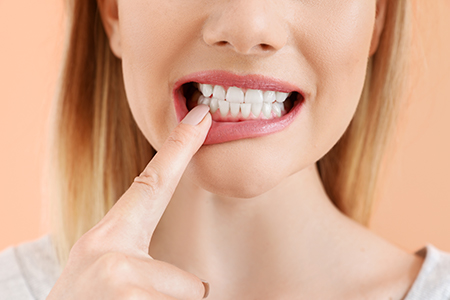
Gum disease is not only a local problem; chronic oral inflammation is increasingly linked with broader health concerns. Researchers have identified associations between advanced periodontal disease and conditions such as cardiovascular disease, diabetes, and respiratory illnesses. While the nature of these links is complex, maintaining healthy gums reduces inflammation and supports overall health efforts.
Good periodontal care can be particularly important for people managing chronic medical conditions. For example, controlling periodontal inflammation helps people with diabetes stabilize blood sugar, and addressing severe gum disease can reduce sources of infection that complicate other systemic health issues.
Our clinical approach emphasizes prevention and coordination. When appropriate, we work with your medical providers to align dental treatment with your broader health needs, always aiming for safe, evidence-based decisions that protect both oral and systemic wellbeing.
Gingivitis is the earliest, reversible phase of gum disease. It shows up as redness, puffiness, or bleeding around the gums but has not yet caused irreversible tissue or bone loss. The encouraging news is that with timely intervention — improved daily cleaning, professional care, and targeted hygiene instruction — gingivitis can usually be reversed.
A typical treatment plan for gingivitis focuses on removing the plaque and calculus that fuel inflammation, teaching more effective brushing and flossing techniques, and scheduling follow-up visits to ensure healing. Behavior changes at home are central; consistent, gentle cleaning at the gumline can prevent a relapse and keep tissues healthy over the long term.
Patients who respond well to early care often avoid the need for further intervention. That makes awareness and quick action important: noticing bleeding or swelling early and addressing it with your dental team greatly improves the prognosis of your periodontal tissues.

If gingivitis goes untreated, inflammation can progress to periodontitis, a condition in which the supporting structures around the tooth — connective fibers and bone — are harmed. As disease advances, periodontal pockets deepen and bone loss can occur, making teeth less stable and more difficult to clean effectively with home care alone.
Treatment for periodontitis focuses on halting disease progression, reducing pocket depth, and regenerating lost tissues when possible. Depending on the severity, options range from focused nonsurgical therapy to procedures that restore contour and support. The primary objective is to stabilize the situation and create conditions that allow for maintainable oral health.
Contemporary periodontal care often combines mechanical cleaning with adjunctive therapies — such as localized antimicrobial delivery or host-modulating strategies — to reduce bacterial burden and help tissues recover. When tissue and bone loss are significant, regenerative techniques can rebuild support and improve functional and aesthetic outcomes.
Decisions about periodontal therapy are individualized and based on a careful assessment of pocket depths, tissue condition, bone levels, medical history, and how a patient responds to initial care. Our priority is to recommend the least invasive method that will achieve health and stability, then escalate treatment thoughtfully if the disease does not respond as expected.
Most treatment plans begin with improved home care and professional interventions designed to remove subgingival bacteria and calculus. When these conservative measures are effective, they can arrest disease and put patients on a maintenance schedule that preserves results. If deeper or more complex disease is present, surgical options and regenerative techniques become appropriate tools.
We use a range of technologies and procedures — from careful scaling and root planing to modern surgical approaches and laser-assisted therapies when indicated. The goal is always the same: reduce inflammation, restore healthy tissue relationships where possible, and provide a predictable path to long-term maintenance.

When detected early, periodontal conditions can often be managed without surgery. Scaling and root planing — careful removal of plaque and hardened deposits beneath the gumline and smoothing of root surfaces — is the foundational non-surgical approach. This work reduces bacterial reservoirs and encourages the gums to reattach to cleaner tooth surfaces.
Adjuncts to care may include localized antimicrobials placed below the gumline or short courses of systemic medication in selected cases. These measures are chosen to support healing and to reduce bacterial levels while you improve daily home care practices.
Successful non-surgical treatment is followed by a personalized maintenance plan. Regular periodontal maintenance visits help catch any recurrence early and preserve the improvements achieved through initial therapy.
For disease that has progressed to deeper pocketing or significant bone loss, surgical approaches can provide access for thorough cleaning and allow the clinician to reshape tissues and bone to healthier contours. Flap procedures are commonly used to reduce pocket depth and create surfaces that are easier to keep clean.
In addition to pocket reduction, regenerative procedures such as bone grafts, guided tissue regeneration, and biologic agents may be used to encourage the return of lost bone and soft tissue. These techniques aim to restore support and improve long-term tooth stability when appropriate.
Modern periodontal therapy may also incorporate laser technology in selected cases. Lasers can assist in removing diseased tissue, reducing pocket depth, and addressing inflammation around implants, always used where evidence supports a safe, beneficial outcome.
The clinical goals of surgical therapy include removing deeply embedded bacteria, halting further bone loss, and establishing a tissue architecture that patients can maintain at home.
If you have noticed any signs of gum trouble or if your dental exam indicates periodontal concerns, early evaluation is the best next step. A timely plan can preserve your natural teeth, improve comfort, and support your overall health. Contact Crowns Now Family Dentistry to learn more about periodontal care and how we can help you protect your smile.

Most people don’t realize that periodontal disease is the leading cause of tooth loss among adults. According to statistics from the Centers for Disease Control and Prevention, one out of every two adults over the age of 30 in the United States has periodontal disease.
You may be surprised to learn that the human mouth is home to a wide variety of microbes. The fact is that over 700 different strains of bacteria have been detected in the oral cavity. Although some of these bacteria are beneficial, others are harmful to oral health. Without proper oral hygiene and routine dental care, these harmful bacteria can cause tooth decay and gum disease, compromising both your oral health and overall wellbeing.
In addition to inadequate oral hygiene and infrequent professional care, other factors, including smoking, genetic tendencies, and unchecked diabetes, can contribute to the escalation of periodontal disease.
Your gums and teeth have an interdependent relationship, which means healthy teeth depend on the support of healthy gums. Also, taking care of your smile does more than keep your teeth and gums in optimal condition; good oral health also supports systemic health. In addition to being the leading cause of tooth loss in adults, researchers are finding more and more links between periodontal disease and a number of medical problems, including heart disease, stroke, diabetes, respiratory problems, and adverse pregnancy outcomes such as pre-term and low birth-weight babies.
If you notice that your gums are bleeding with the slightest pressure while brushing or flossing, it’s a sign of gingivitis. Although gingivitis is the earliest stage of gum disease, it can easily be reversed with deeper cleanings as well as an improved regimen of oral hygiene at home.
In the absence of professional treatment and better home care, gingivitis progresses to the next stage, which is known as periodontitis. In this stage, the connective tissue and bone that hold the teeth in place begin to break down with an increase in pocketing between the teeth and bone, gum recession, and bone loss. Without proper treatment by your dentist, periodontitis will progress from a mild to moderate loss of supporting tissue to the destruction of the bone around the teeth.
Although gingivitis can often be reversed with improved oral hygiene and professional cleanings, as periodontal disease advances, more extensive procedures are required to halt its progression. Based on a complete assessment of your periodontal health and a review of possible contributing factors, our office will recommend the best options in care. Treatment for periodontitis may include a series of deeper cleanings known as root planing and scaling, surgical procedures to reduce pocket depth, bone or tissue grafts, laser procedures, or antimicrobial medications.
The cost of care depends on the type of procedures required to restore your periodontal health. If you have dental insurance, plans often cover treatment to prevent gum disease as well as many procedures to treat the various stages of gum disease. Our goal is to help patients restore and maintain good oral health. We do all we can to help you begin care without additional stress or delay. Our business office works with you to maximize your benefits and provide easier, more convenient payment options.
By seeing our office regularly for care and doing your best to eat a healthy diet and practice good oral hygiene, you can keep your smile in tip-top shape as well as protect your overall wellbeing.
At the office of Crowns Now Family Dentistry, we provide a comprehensive range of services to address all your oral healthcare needs. You can rest assured that your smile is in the best of hands at our office. Our skilled and experienced team maintains a position at the forefront of advances in care and remains dedicated to providing the highest quality of skilled and compassionate treatment.
Periodontal disease refers to a group of inflammatory conditions that affect the tissues supporting the teeth, including the gums, periodontal ligament and alveolar bone. These conditions arise when bacterial plaque and hardened tartar accumulate along and below the gumline, provoking an immune response that damages soft tissue and bone. Periodontal disease ranges in severity from reversible gingivitis to destructive periodontitis that can compromise tooth stability.
Because early stages are often painless and progress silently, many patients are unaware a problem exists until more significant damage has occurred. Regular dental examinations and professional cleanings are essential to detect inflammation and intervene before irreversible tissue loss. Prompt diagnosis and treatment improve the chances of preserving natural teeth and supporting structures.
The primary cause of gum disease is bacterial biofilm (dental plaque) that accumulates on tooth surfaces and below the gums, which can mineralize into tartar and sustain harmful bacteria. Contributing risk factors include poor oral hygiene, tobacco use, uncontrolled diabetes, certain medications, hormonal changes, genetic susceptibility and advanced age. These factors can alter the oral environment and the body’s response to bacteria, increasing the likelihood of disease progression.
Patients with medical conditions that affect immune function or healing are at higher risk of more severe periodontal breakdown. A thorough medical and dental history helps clinicians identify risk and tailor prevention and treatment plans. Addressing modifiable risks, such as smoking and glycemic control, is a key component of comprehensive periodontal care.
Early signs of periodontal disease often include red, swollen or tender gums and bleeding during brushing or flossing. As disease advances, patients may notice gum recession with exposed root surfaces, persistent bad breath or a chronic bad taste, and increasing tooth sensitivity to hot or cold stimuli. These symptoms indicate an inflammatory process that requires professional evaluation.
More advanced disease can produce clinical signs such as deepened periodontal pockets, tooth mobility, shifting teeth, and changes in how partial dentures fit. Because symptoms can vary and sometimes remain subtle, patients should report even mild changes in their oral condition. Timely professional assessment allows for appropriate treatment before greater tissue and bone loss occur.
Gingivitis is the earliest stage of gum disease and is characterized by inflammation confined to the gingival tissues without loss of connective tissue attachment or bone. It commonly presents with redness, swelling and bleeding but is usually reversible with improved oral hygiene and professional cleaning. Detecting and treating gingivitis early prevents progression to more destructive forms of disease.
Periodontitis develops when gingival inflammation extends deeper, causing destruction of the periodontal ligament and alveolar bone that support the teeth. This stage produces pocketing, recession and potential tooth mobility that are not fully reversible without specialized treatment. Management focuses on halting disease progression and, when possible, regenerating lost tissue to restore function and stability.
Diagnosis begins with a comprehensive clinical examination that includes periodontal probing to measure pocket depths, assessment of gum recession and mobility, and a review of the patient’s medical and dental history. Periodontal charting documents the health of each tooth and helps track changes over time. Clinicians also evaluate soft tissue appearance and signs of infection or exudate.
Radiographs are used to assess the level of alveolar bone and identify bone loss patterns that are not visible clinically. In select cases, adjunctive tests such as bacterial assays or inflammatory biomarkers may inform treatment planning. Combining clinical findings with imaging and history allows the dental team to determine disease severity and create an individualized care plan.
Non-surgical therapy is often the first line of treatment and typically includes professional scaling and root planing to remove plaque and tartar from below the gumline and smooth root surfaces. This mechanical cleaning reduces bacterial load and promotes reattachment of the gingiva to the tooth surface. Clinicians may place localized antimicrobial agents beneath the gums or prescribe systemic medications when indicated to help control infection.
Alongside in-office procedures, clinicians provide tailored oral hygiene instruction and recommend supportive therapies such as antiseptic rinses and interdental cleaning aids. A structured periodontal maintenance schedule of regular professional cleanings and evaluations is essential to monitor healing and prevent recurrence. Non-surgical care aims to halt disease progression and restore a healthy environment for the periodontal tissues.
Surgical periodontal therapy is considered when non-surgical measures are insufficient to control disease, typically in cases with persistent deep pockets, significant bone loss or anatomical factors that limit access for cleaning. Common surgical approaches include flap surgery for pocket reduction, osseous recontouring to restore healthy bone contours, and soft tissue grafts to address recession. The objective is to remove bacterial deposits, reduce pocket depths and create conditions that facilitate effective home care.
Regenerative procedures such as bone grafting and guided tissue regeneration may be used to rebuild lost bone and connective tissue where feasible, improving tooth support and enabling future restorative options. Minimally invasive techniques and laser-assisted therapy are also employed selectively to reduce tissue trauma and enhance healing. Postoperative care and adherence to maintenance protocols are critical to long-term success following surgery.
Research has established associations between periodontal disease and several systemic health conditions, including cardiovascular disease, diabetes, respiratory illnesses and adverse pregnancy outcomes. Chronic oral inflammation can contribute to systemic inflammatory burden and complicate the management of existing medical conditions. While periodontal therapy can reduce local inflammation, the exact nature and directionality of these relationships continue to be studied.
Managing periodontal disease is an important component of comprehensive health care because improving oral health can support overall well-being and help mitigate systemic risks. Dental professionals coordinate with medical providers when systemic conditions or medications influence periodontal status. Patients with chronic health issues should inform their dental team so care plans can be adapted appropriately.
Effective home care begins with thorough twice-daily brushing using a soft-bristled toothbrush and daily interdental cleaning with floss, interdental brushes or other recommended aids to remove plaque from between teeth. Using an antiseptic mouthrinse and maintaining a balanced diet that limits fermentable carbohydrates can further reduce bacterial challenges. Smoking cessation and good control of systemic conditions, such as diabetes, significantly improve treatment outcomes and lower disease risk.
Regular dental visits for professional cleanings and periodontal monitoring are essential to detect changes early and maintain tissue health. Patients should follow individualized preventive recommendations provided by their dental team and report any new symptoms promptly. Consistent home care combined with professional support gives the best chance to prevent progression and preserve natural teeth.
The team at Crowns Now Family Dentistry provides comprehensive periodontal evaluations, individualized treatment plans and preventive maintenance to help patients achieve and sustain healthy gums. Our clinicians use evidence-based diagnostic techniques, non-surgical therapies and, when indicated, surgical or regenerative procedures to address a wide range of periodontal conditions. We prioritize patient education and tailored home care strategies to support long-term periodontal stability.
In addition to clinical treatment, the practice coordinates care with medical providers when systemic health factors affect oral health, ensuring a collaborative approach to patient well-being. Regular periodontal maintenance visits are scheduled based on disease risk and response to therapy to monitor healing and prevent recurrence. Patients can expect a focus on conservative, targeted care designed to preserve natural teeth and supporting structures whenever possible.
Quick Links
Contact Us